Cosmetic surgery is usually safe in the right hands, but no operation is risk-free. This guide explains in plain language the two kinds of complications patients can face: direct ones that come from the procedure itself and indirect ones that follow later, from mental health effects to hidden costs. Learn what to watch for, how to lower your risk before you decide, and which warning signs need prompt medical care.
Most people who have cosmetic surgery recover well and are happy with the results. Still, every operation carries some risk, and the risks do not all show up on the operating table.
Doctors often split complications into two groups. Direct complications happen because of the surgery itself. Indirect complications are knock-on effects that appear later, such as emotional distress, extra costs, or problems after traveling for care. Knowing both kinds helps you ask better questions before you book.
Direct Complications of Cosmetic Surgery
Direct complications are medical problems caused by the procedure, the anesthesia, or the healing process. Some are minor and pass on their own. Others need more treatment or another operation.
Risks That Come With Any Surgery
Every surgery carries a baseline set of risks. MedlinePlus, the National Library of Medicine’s health site, lists infection, too much bleeding, and reactions to anesthesia among them. In cosmetic surgery, common problems also include:
- A pocket of blood (hematoma) or fluid (seroma) under the skin
- Poor wound healing and visible scarring
- Numbness or nerve injury near the surgical site
- Uneven or unexpected results, such as asymmetry
- Blood clots in the legs that can travel to the lungs
Your own health changes your risk. Smoking, diabetes, and long operations can all raise the odds of problems, so be honest about your history.
Implant-Related Complications
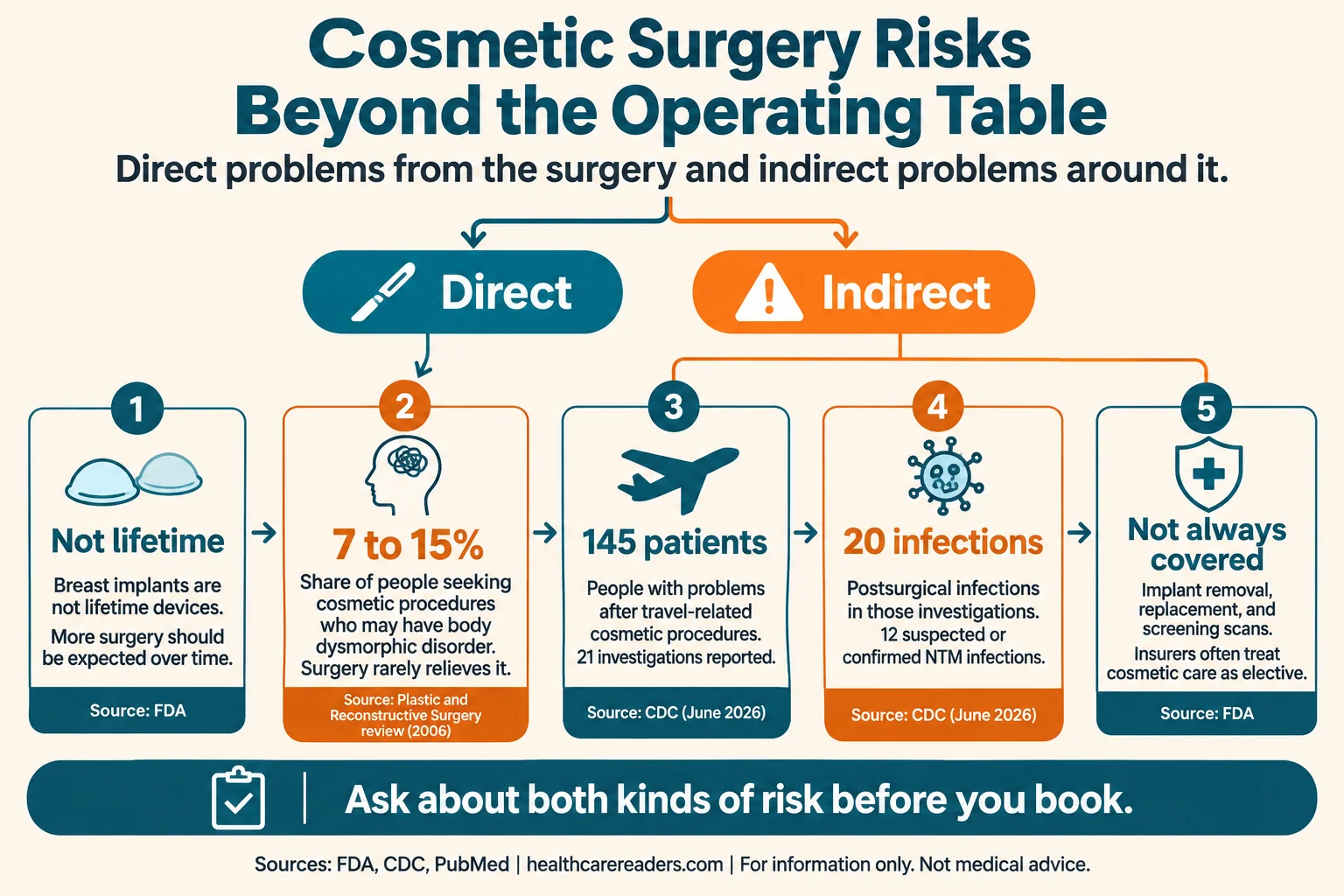
Implants add a second layer of risk. The FDA says breast implants are not lifetime devices and that you should assume you will need more surgery at some point. Its breast implant safety information lists capsular contracture (scar tissue that tightens around the implant), rupture, deflation, pain, and infection among the risks.
A rare cancer of the immune system called breast implant-associated anaplastic large cell lymphoma (BIA-ALCL) has also been linked to implants, most often textured ones. It is not breast cancer, and it is treatable, but the FDA notes there is a risk of death. Persistent swelling or pain around an implant deserves a prompt visit to your surgeon.
Indirect Complications of Cosmetic Surgery
Indirect complications do not come from the incision. They come from what happens around the surgery, and they are easy to overlook.
Emotional and Mental Health Effects
Not everyone feels better after surgery. Some people struggle with regret or with new worries about other parts of their appearance. A smaller group has body dysmorphic disorder (BDD), a condition in which a person becomes consumed by a slight or imagined flaw. A review in Plastic and Reconstructive Surgery found BDD in about 7 to 15 percent of people seeking cosmetic procedures, and surgery usually does not relieve it. Therapy and medicine tend to work better.
Financial Strain and Insurance Gaps
Complications can be costly. A second operation, a revision, or implant removal may not be covered, because insurers usually treat cosmetic care as elective. The FDA warns that implant removal, replacement, and screening scans may not be covered by insurance. For a closer look at price tags and policy exclusions, see our breakdown of the real cost of cosmetic surgery.
Risks of Traveling for Surgery
Lower prices abroad can come with hidden risks. In June 2026, the CDC reported 21 investigations involving about 145 patients who had problems after traveling for cosmetic procedures such as liposuction, tummy tucks, and breast or buttock augmentation. CDC’s report counted 20 post-surgical infections, 12 of them suspected or confirmed nontuberculous mycobacteria (NTM) infections, and found gaps in cleaning, hand hygiene, and equipment sterilization. If you are weighing a trip, our guide to medical tourism costs and risks covers what to check first.
Recovery Time and Long-Term Follow-Up
Recovery can take longer than planned, which means lost income and help at home. Swelling, bruising, and tightness are normal at first, but they should slowly improve, and scars can take a year or more to mature. If healing stalls or you cannot return to work when expected, tell your surgeon early. Some devices also need monitoring for years, and the FDA recommends regular ultrasound or MRI scans for certain breast implants.
Direct and Indirect Complications at a Glance
| Type | Examples | When it may appear |
|---|---|---|
| Direct | Infection, bleeding, blood clots, scarring, nerve injury, anesthesia reactions | During surgery or within weeks |
| Direct (implants) | Capsular contracture, rupture, BIA-ALCL | Months to years later |
| Indirect | Regret, BDD, anxiety about appearance | Weeks to years later |
| Indirect | Revision costs, insurance denials, lost income | During and after recovery |
| Indirect | Infections after travel abroad | Often after returning home |
How to Lower Your Risk
You cannot remove every risk, but you can shrink it.
Choose the right surgeon. Check board certification and ask how often they perform your procedure. Not sure which procedure fits your goal? Our guide to common types of cosmetic surgery compares options by goal and recovery.
Share your full history. Tell your surgeon about medicines, supplements, smoking, and past surgeries.
Ask about complications. Request complication rates, the plan if something goes wrong, and who handles emergencies.
Plan for recovery and costs. Budget for time off, follow-up visits, and the chance of a revision.
Be honest about your motives. If worries about appearance feel overwhelming, talk with a mental health professional first.
When to Get Medical Help Right Away
Call your surgeon or seek emergency care if you have:
- Fever, chills, or spreading redness and warmth
- Pus or a foul smell from the wound
- Severe or worsening pain, or sudden one-sided swelling
- Chest pain or shortness of breath
- A wound that opens, or sudden changes in a breast implant
Takeaways
Complications of cosmetic surgery come in two forms. Direct ones, like infection, bleeding, and implant problems, come from the operation. Indirect ones, like emotional distress, surprise costs, and travel-related infections, grow around it. Careful planning, an experienced surgeon, and honest questions give you the best chance of a smooth recovery.
FAQs
What is the most common complication of cosmetic surgery?
Infection, bleeding, and fluid buildup are among the most common, along with scarring and uneven results. For breast implants, capsular contracture and the need for more surgery are the main issues, according to the FDA.
Are indirect complications less serious than direct ones?
Not necessarily. Emotional distress and financial strain can affect daily life for years. Infections after traveling for surgery can also be severe.
Can cosmetic surgery make body image worse?
It can for some people, especially those with body dysmorphic disorder. Talk with a doctor if you feel constantly distressed about a small or imagined flaw.
When do complications show up?
Some appear within days, such as bleeding or infection. Others, like implant problems or scar changes, can take months or years, so keep your follow-up visits.
Does insurance cover cosmetic surgery complications?
Often not. Coverage varies by plan, so ask your insurer before you book.
Disclaimer: This article is for information only and is not medical or cosmetic advice. Results and risks vary from person to person, so talk with a board-certified doctor before trying any procedure. Seek urgent medical care for symptoms such as fever, severe pain, chest pain, or shortness of breath after surgery.
Sources
- U.S. Food and Drug Administration: What to Know About Breast Implants; Risks and Complications of Breast Implants
- Centers for Disease Control and Prevention: CDC Highlights Adverse Outcomes Linked to Travel-Related Cosmetic Procedures (June 2, 2026)
- National Library of Medicine, MedlinePlus: After Surgery
- Plastic and Reconstructive Surgery (2006), PubMed: Body dysmorphic disorder and cosmetic surgery