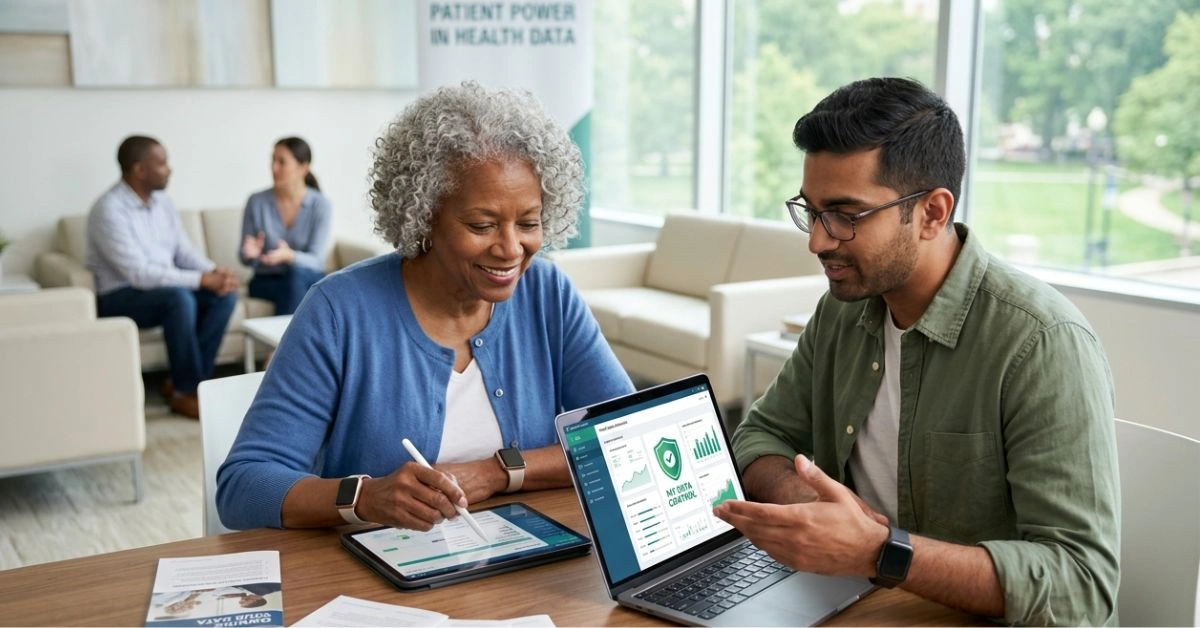
You see five doctors, and none of them can see what the others did. Your lab results sit in one portal, your scans in another, and your prescriptions in a third. For decades, patients were the last people to see their own records. That is changing fast, and this guide shows you how to take advantage.
From Locked Filing Cabinets to Pocket Records
Not long ago, getting your medical file meant filling out a paper form, waiting weeks, and paying copying fees. Many patients simply gave up.
Today the picture looks very different. Federal rules, smartphone apps, and patient portals have turned records into something you can open in seconds, often before your doctor has even read the result.
Data from the Office of the National Coordinator for Health IT shows how quickly the shift has happened. In 2024, 77% of Americans were offered online access to their records, and 65% used it at least once.
| Measure | Earlier Figure | 2024 Figure |
|---|---|---|
| Offered online access to records | 73% (2022) | 77% |
| Accessed records online in past year | 57% (2022) | 65% |
| Frequent users (6 or more times a year) | 15% (2019) | 34% |
| Caregiver or proxy access | 24% (2020) | 51% |
These numbers come from the Health Information National Trends Survey and are summarized in an ASTP/ONC analysis of patient access.
Patients with serious illness lead the way. About 69% of people managing a chronic condition and 76% of those with a recent cancer diagnosis accessed their records online in the past year.
What Patients Actually Do With Their Data
Access is only useful if people act on it. The most common uses are practical, and they map neatly onto the everyday friction of being a patient.
| Portal Activity | Share of Portal Users (2024) | Why It Matters |
|---|---|---|
| Viewing lab results | 90% | Seeing results early reduces anxiety and delays |
| Reading clinical notes | 80% | Reveals how your doctor understood your visit |
| Messaging providers | 79% | Cuts phone tag and unnecessary visits |
| Scheduling appointments | 77% | Saves time and reduces missed follow-ups |
Reading your notes can feel strange at first. Yet it often helps you catch errors, remember instructions, and prepare better questions for the next visit.
The Laws Behind the Shift
Patients did not win this access by accident. Several rules work together, and knowing them gives you real leverage.
| Rule or Law | What It Does for You |
|---|---|
| HIPAA Right of Access | Lets you request your records, generally with a response within 30 days |
| 21st Century Cures Act | Bans “information blocking” by providers, insurers, and health IT vendors |
| Standardized APIs (FHIR) | Lets approved apps pull your records straight from the hospital system |
| Open Notes movement | Encourages providers to share visit notes with patients by default |
Under HIPAA, providers may charge only a reasonable, cost-based fee for copies. You can learn the details on the HHS page about your right to access health information.
The Cures Act matters because it targets the quiet obstruction that used to frustrate patients. Delay tactics and unnecessary hurdles can now violate federal rules.
For a plain-language overview of what else the law gives you, see our guide to patient rights in healthcare.
Apps That Pull Your Records Together
Here is a common frustration. About 59% of Americans have more than one patient portal. Checking each one is tedious, and no single portal shows the full story.
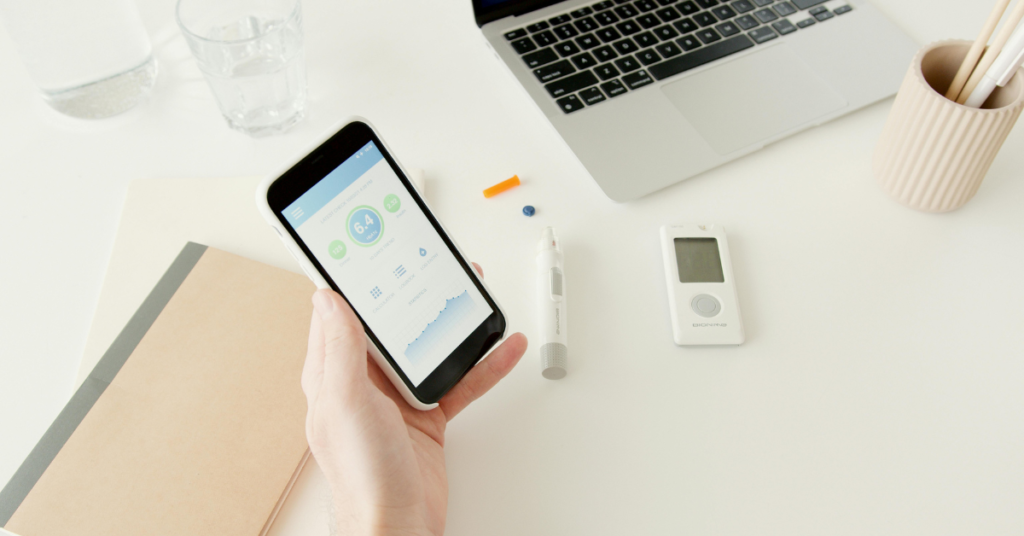
Smartphone health apps solve part of this problem. With your permission, they connect to several systems and gather records into one view.
| Tool Type | What It Does | Best For |
|---|---|---|
| Health record aggregators | Pull data from multiple hospitals and clinics | People who see many specialists |
| Phone-based health wallets | Store records, immunizations, and lab results on your device | Travel and emergencies |
| Provider patient portals | Show data from a single health system | Messaging and scheduling |
| Wearable dashboards | Track heart rate, sleep, and activity | Daily habits and trends |
Some of these tools also let you share your history with a new doctor in a few taps. That alone can prevent repeated tests and conflicting prescriptions.
If you want to see how all of this fits together, our explainer on healthcare interoperability covers how systems exchange data.
How to Take Control: A Practical Checklist
Owning your data takes only a few deliberate steps. Start with the easiest wins and build from there.
| Step | Action | Time Needed |
|---|---|---|
| 1 | Activate every patient portal you have been offered | 10 minutes each |
| 2 | Download your medications, allergies, and immunization list | 15 minutes |
| 3 | Review recent visit notes and flag anything inaccurate | 20 minutes |
| 4 | Ask for corrections in writing when something is wrong | 10 minutes |
| 5 | Set up proxy access for a trusted family member | 15 minutes |
| 6 | Store a backup copy in a secure location | 10 minutes |
Correcting errors deserves special attention. Under HIPAA, you can ask a provider to amend inaccurate information. They may decline, but they must explain why.
Strong health literacy makes all of this easier. Our piece on how health literacy empowers patients offers practical tips for understanding what you read.
Why It Matters: Real-Life Wins
Better access shows up in ordinary moments. A parent tracks a child’s vaccinations before school registration. A traveler pulls up allergy details during an emergency abroad.
Caregivers benefit too. Proxy access lets adult children manage an aging parent’s appointments and medications without endless phone calls.
| Situation | How Direct Access Helps |
|---|---|
| Switching doctors | Share your history instantly instead of repeating it |
| Second opinions | Send scans and lab results without waiting on paperwork |
| Managing a chronic condition | Spot trends in blood pressure, glucose, or lab values |
| Caring for a parent | Coordinate visits and prescriptions from one account |
| Medical emergencies | Show allergies and medications to responders quickly |
The Digital Divide Still Needs Fixing
Not everyone benefits equally. Federal researchers note that portal activation rates still differ across groups, which may reflect a broader digital divide.
Older adults, people with limited internet access, and those with low health literacy often face the biggest hurdles. Clear instructions, multilingual tools, and in-person help can close the gap.
Clinics can help by encouraging use. In 2024, nearly nine in ten people offered portal access said their provider encouraged them to use it, and encouragement strongly shapes who logs in.
The Privacy Catch Nobody Mentions
More access brings more risk. The records inside your hospital’s system are covered by HIPAA. Many consumer apps are not.
When you move data into a third-party app, you may leave HIPAA’s protections behind. The app’s own privacy policy then becomes the rule that matters.
| Risk | What Could Go Wrong | How to Protect Yourself |
|---|---|---|
| Unprotected apps | Data sold or shared with advertisers | Read the privacy policy before connecting |
| Weak passwords | Accounts taken over by attackers | Use a password manager and two-factor login |
| Oversharing | Employers or insurers learning sensitive details | Share only what each person needs |
| Lingering permissions | Old apps still pulling your records | Review connected apps every few months |
| Public Wi-Fi | Intercepted logins | Use a private network or mobile data |
Regulators are paying attention. The Federal Trade Commission updated its Health Breach Notification Rule in 2024 to make clearer that many health apps must tell users when their data is breached.
To dig deeper, read our guide to healthcare data privacy and security and our overview of patient data privacy and confidentiality.
The Next Frontier: Consent and Portability
Access is only the first chapter. The next step is control, meaning you decide who sees what, for how long, and for which purpose.
Digital consent tools are making that practical. Instead of signing a stack of paper forms, patients can approve or revoke access with a tap. Our look at digital medical consent explains how this builds trust.
Technology is also being tested to make records tamper-resistant and easier to move between systems. For one approach, see how blockchain secures EHR interoperability.
| Emerging Capability | Patient Benefit | Current Status |
|---|---|---|
| Granular digital consent | Choose exactly what each provider sees | Spreading gradually |
| Portable records across systems | No more starting from zero at a new clinic | Improving, uneven |
| Data-sharing for research, with permission | Contribute to medical progress on your terms | Early stage |
| AI summaries of your own records | Plain-language explanations of results | Growing quickly |
Frequently Asked Questions
Do I own my medical records? Providers generally hold the physical or electronic record, but you have a legal right to access and obtain a copy.
Can I see my doctor’s notes? In most cases, yes. Federal rules require providers to share most notes, with limited exceptions such as psychotherapy notes.
Are health apps safe? It depends. Choose apps with clear privacy policies, strong security, and a clear way to delete your data.
Conclusion: A Healthier Balance of Power
The solution is simple in principle. Activate your portals, review your records, correct what is wrong, and share only with people you trust. Each step shifts power from institutions back to the person whose health is actually at stake.
Looking ahead, expect easier consent controls, smarter tools that explain results in plain language, and stronger privacy rules. The future patient will not just receive care. They will co-manage it, with full visibility into their own data.
This article is for general information only and is not medical or legal advice.